Before we ever released Patriarchy, I was afraid of it.
Not the music.
Not the stripped-down vocal.
Not of the first chord hitting like a fist through the speakers.
I was afraid of what it would require from me.
Some songs ask only to be delivered. They ask for technique, timing, breath, and passion. This one asked for something else. It asked for honesty. It asked me to stand in the open and say things I had spent most of my life swallowing.
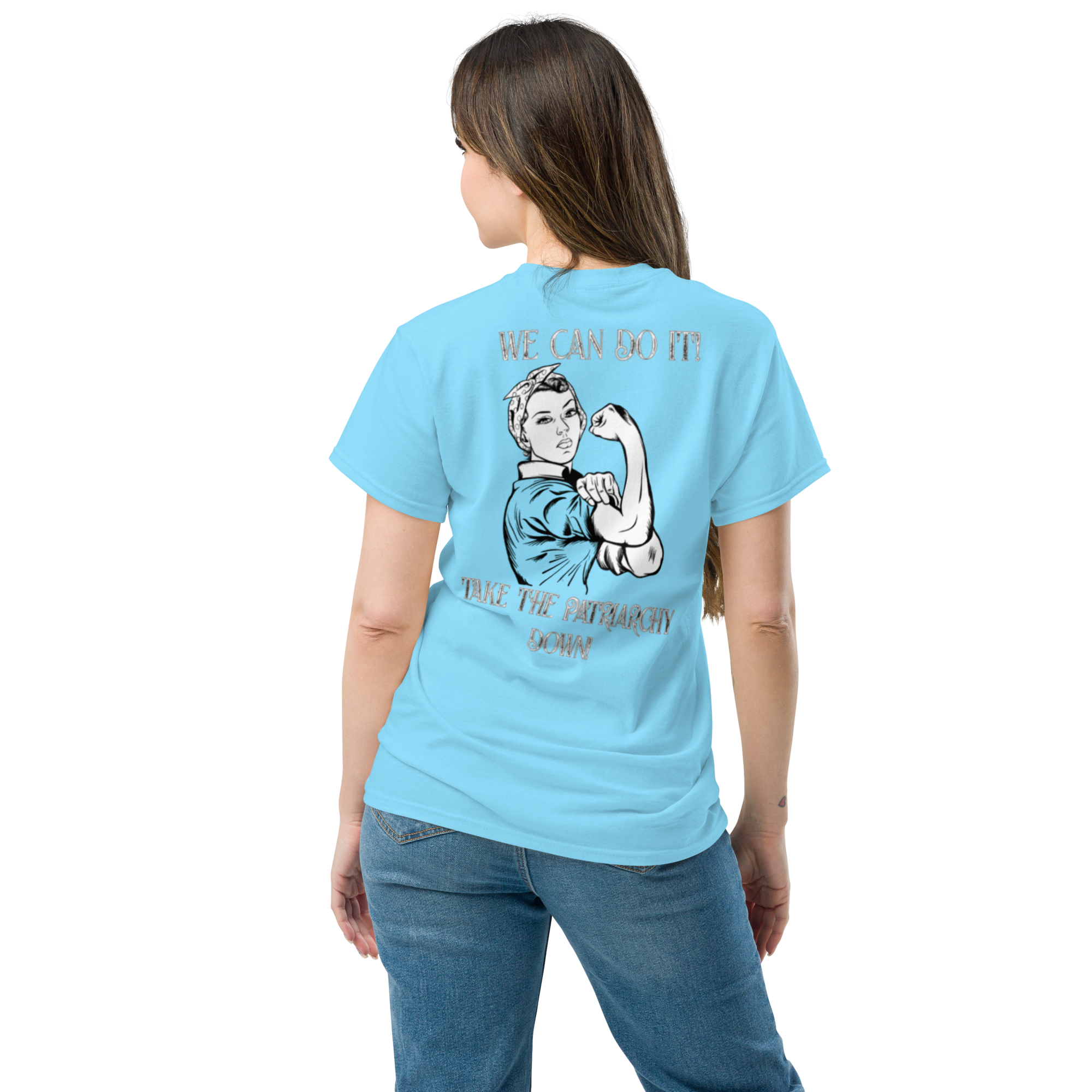
It begins with a line designed to shock, and a chorus some people reject on instinct:
Take the patriarchy down.
Every lyric in the song comes from lived experience with the world as I have known it—moments of dismissal, condescension, expectation, erasure. The kind of things that are considered normal, that I’ve just taken quietly for years.
And silence has always been my native language.
I was never someone who afforded confrontation. My reflex was retreat. Keep the peace. Say nothing. Walk away. Let the moment pass and tell myself it didn’t matter because there was no recourse anyway.
But Sustayn stands in defiance of that instinct.
Rock ’n’ roll is truth with the volume up. It’s rebellion when rebellion is earned. It’s saying the thing everyone else wants whispered. It is the refusal to disappear.
Where I come from, that can be dangerous.
The place I have called home for the last twenty years is a small and deeply conservative community. It is full of kindness and contradiction, as most places are. We value self-reliance, hard work, tradition, and faith. We are educated, practical, and generous. We are also shaped by old religious hierarchies so familiar they can pass for nature.
I love Jesus. I say that plainly.
I also reject the notion that God made women to live subservient to men.
Both things are true.
But this is not an argument about doctrine. It’s a story about what happens when a person learns to stop apologizing for her own voice.
In the early days of performing Patriarchy, I would explain it before we played. I’d sand off the edges. Make it digestible. Reassure the room.
Truth is, I was scared of what would happen if I didn’t.
But I found out anyway.
Mid-speech, while I was talking about abuse of power and equality, a woman in the crowd jumped up and started screaming at me.
I can’t remember the exact words. Memory is merciful that way.
But I still feel the sting of the venom.
The stage seemed to tilt. My body went cold. Blood drained from my face. Time slowed into individual drops.
Would it be fight or flight?
For one terrible second, I wanted to vanish.
Instead, I heard myself speak.
This is not a song about hating men, I said. It’s a song about up-lifting women.
Then we played.
What happened next surprised me. The crowd leaned in. Voices rose. Faces changed. It was as if the hostility had burned away the fog and left the message standing there in plain view.
Still, the moment shook me. Courage is rarely born in a blaze. More often it arrives by degrees, after fear has exhausted itself.
It was not until our California tour that something finally settled inside me. I realized if someone is determined not to hear you, no disclaimer will save you. So I stopped asking permission.
I stopped shrinking.
Now when we play Patriarchy, I start it with a battle cry instead.
I mean what I sing. I trust the song to carry its own weight. I trust myself to carry mine.
When rock ’n’ roll found me, I was an unlikely disciple.
But it has done what grace sometimes does.
It called the stronger self inside me by name.
And she answered.